2026-10-28T02:46:26.271Z ·
Why the Third Floor Stays Cold in a Lowell Triple-Decker
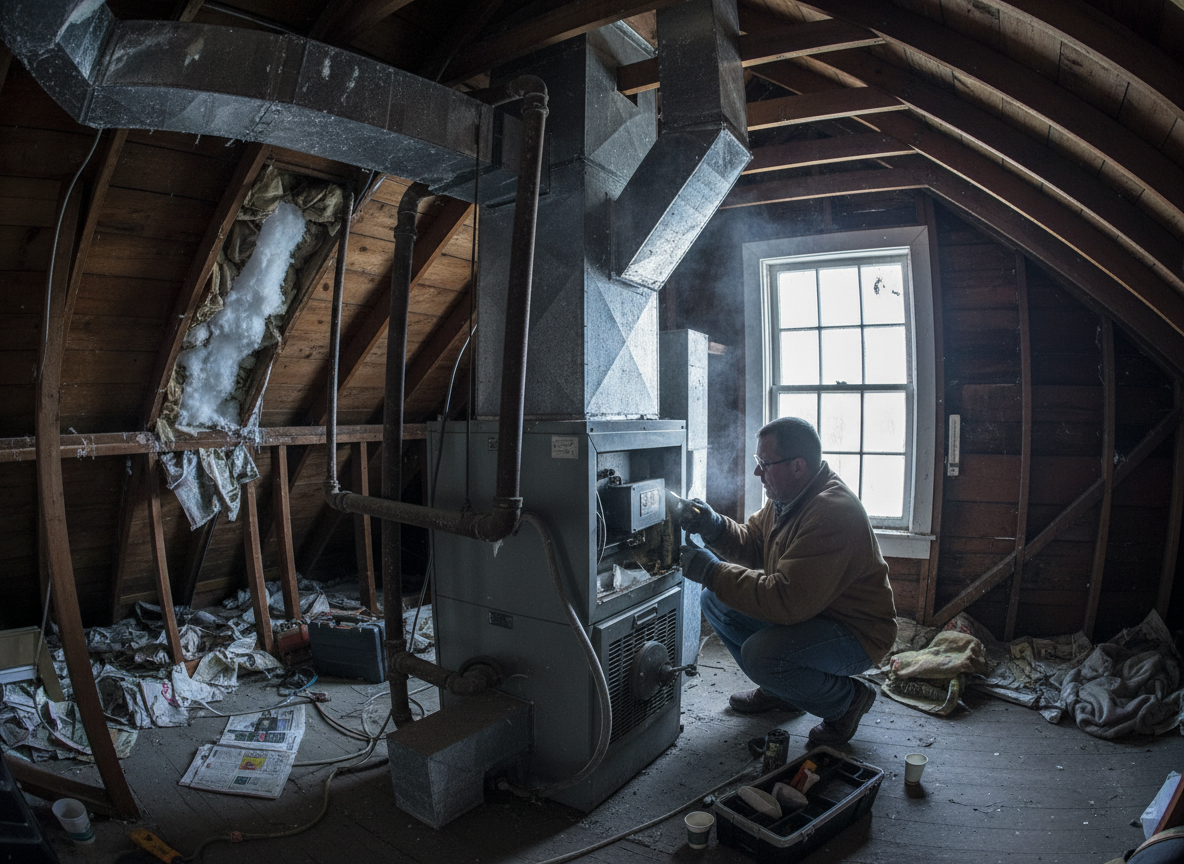
The complaint is almost always the same shape. The first floor is warm, the second is acceptable, and the third floor never gets there no matter where the thermostat is set. In a Lowell three-decker the furnace is usually working, and the reason the top flat is cold sits in the ducts, the return path or the building itself.
A triple-decker was framed before forced-air heating existed. The supplies that serve it now were threaded into walls, chases and the voids between joists long after the building went up, and each flat has its own furnace or air handler feeding a run that was fitted to the space available rather than to a calculated load.
The top flat starts with three disadvantages. Its supply run is the longest, the attic above it is usually the least insulated part of the building, and its ceilings and knee walls lose heat in a way the lower flats do not. A furnace delivering the right temperature rise can still leave that floor cold if the heat never arrives or leaves too quickly.
Returns are the second half of the problem. Many conversions rely on a single central return or a grille in the stair hall, with bedroom doors closed for most of the winter. A closed door pressurises the room, supply air cannot push in, and the room stays cold while the hall stays warm. Cutting a return path or undercutting the door often does more than any adjustment at the furnace.
Duct leakage matters more in these buildings than in newer houses. Joints in an unfinished basement and in a cold attic leak into spaces nobody heats, and a run that passes through an unheated porch or a wall cavity loses heat before it reaches the register. Tape and mastic on the accessible joints are unglamorous and effective.
Balancing is the third lever. A register half closed on the second floor takes air from the third, and dampers in the basement trunk are frequently in positions nobody remembers setting. A short balancing pass, with the top floor fully open and the lower floors trimmed back, can shift the pattern without touching the equipment.
The furnace itself can be complicit in two ways. An oversized furnace heats quickly, satisfies the thermostat and shuts down before the top floor has been served, and a blower set to a speed the duct system cannot support raises static pressure and reduces delivery to the furthest runs. Both are measured rather than guessed: temperature rise and static pressure tell the story.
Filters belong in the same conversation. A loaded filter reduces airflow through the whole system, but the longest run feels it first, which is why the top floor is where the complaint starts. A filter that has not been changed since the last tenant moved out is a common finding in a rented flat.
The building envelope is the fourth cause. Balloon framing, common in Lowell's older houses, lets cold air rise through the wall cavities from the basement to the attic, and an unsealed attic hatch or a rim joist that was never insulated does the same thing at a larger scale. Sealing those paths is often what makes a top floor behave.
Thermostat placement can defeat everything else. A thermostat in a hallway above the stairs, or in the warmest room in the flat, reads a temperature that the bedrooms never reach. A remote sensor or a thermostat moved to a representative room changes the behaviour of the system without changing a single duct.
Before any of that, a few things are worth checking. The filter, the registers and the doors can be checked by anyone, and so is the sidewall vent outside, which a drift can bury after a storm. If the furnace is short cycling, if the burners never stay lit or if the blower runs continuously, the problem is at the equipment and no amount of balancing will fix it.
Lowell's January normal low is 16°F, and a top floor is where a marginal system fails first. That is also why the diagnosis should separate the furnace from the distribution before anyone proposes a new one: in a three-decker, the equipment is often the last thing that needs changing.