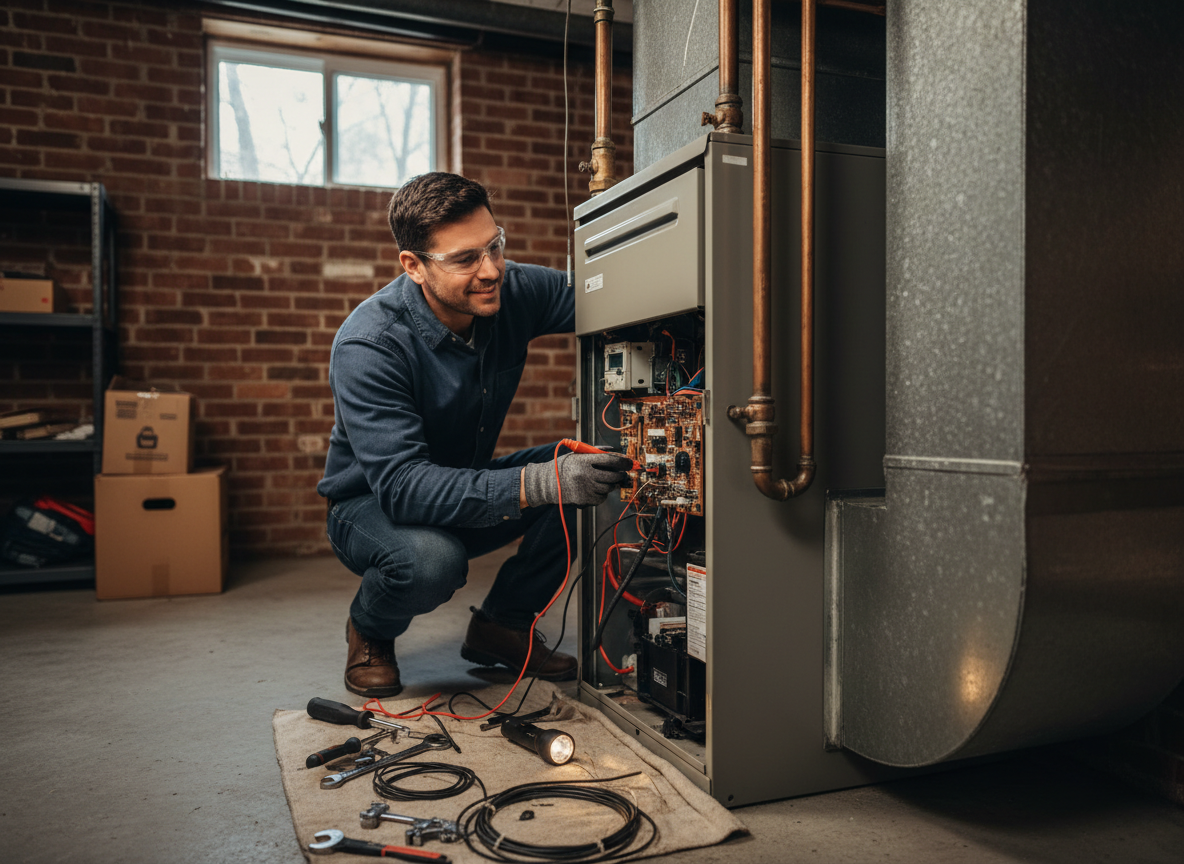
Lowell furnace and heating work
Furnace Repair in Lowell, MA
Gas and electric furnaces and the forced-air systems around them, for houses, triple-deckers and mill conversions across Lowell. The business is based at 90 Elliott Drive, Lowell, MA 01852, USA, and a visit starts by finding out why the heat stopped before anyone talks about a new furnace.
Heating a City Built Around Canals and Mills
Lowell was laid out in the 1820s as a planned mill city on the Merrimack, with a canal system cut to turn the turbines and rows of housing built for the people who worked the looms. The apartments, three-deckers and mill blocks that house the city today are the same buildings, re-heated several times over as coal gave way to oil, oil to gas and, in some flats, to electric resistance heat.
That history shows up in the work. A three-decker in the Highlands or the Acre stacks three flats on a shared frame, with a furnace or air handler for each one, a chimney that often serves more than one appliance, and a basement that doubles as the mechanical room. A converted mill downtown puts the equipment in a closet, on a roof or at the end of a corridor, with a vent run that has to work around brick and granite rather than through a timber wall.
What · the · company
Furnace and Heating Work in Lowell, Massachusetts
Diagnosis first, then the work that fits
01
Furnace Repair
Diagnosis-led repair for gas and electric furnaces in Lowell, working from the thermostat's call for heat thro…
02
Furnace Maintenance
A before-the-season inspection, cleaning and set of measurements for gas and electric furnaces in Lowell, with…
03
Furnace Installation & Replacement
Changeouts and new furnace installations in Lowell, from a room-by-room load calculation and duct assessment t…
Why · this · approach
Why Choose Us
Heating in Lowell is a five-month job rather than a winter emergency, and the housing stock decides most of what can go wrong. The approach here is to treat the building and the equipment as one system: a furnace that is short of air, short of draft or short of combustion air will keep failing no matter how many parts are changed.
Diagnosis Comes Before a New Furnace
A furnace that will not heat can be a failed hot-surface igniter, a flame sensor coated in oxide, a pressure switch that never closes, a tripped rollout switch, a board that has lost its sequence, or on an electric unit a failed sequencer or element. Each has a different fix and a different cause behind it. Replacement is a conclusion the test results have to support, not the opening move on the first visit.
Three Flats, Three Systems
A Lowell triple-decker is three heating systems stacked on one frame. Each flat has its own thermostat and usually its own furnace, and the three share a chimney, a basement and a return-air path through the building. Balancing one flat can unbalance another, and a repair in a rented unit has to be explained to an owner who is not standing in the basement.
A Long Season Exposes Weak Points
NOAA's 1991-2020 normals for Lowell put the normal January low at 16°F and the normal high at 34°F, with 1,243 heating degree days in January alone. Equipment runs hard from November into April, so a marginal capacitor, a tired blower bearing or a partly blocked flue that would survive a short season elsewhere tends to fail in the first sustained cold.
Basements Are the Mechanical Room
Most Lowell furnaces sit in a full basement with the water heater, the laundry and the electrical panel. Combustion air comes from that same space, so a dryer, an exhaust fan or a second appliance starting up can reverse the draft on a naturally vented furnace. Snowmelt that finds a basement floor, a condensate pump lifting to a laundry sink and a return grille cut into a basement door are all part of the same visit.
Snow and Ice Block Sidewall Vents
High-efficiency furnaces vent through PVC at the sidewall, often close to grade or to a drift line. A buried intake or an iced exhaust shuts the furnace down, and a partially blocked one can push exhaust back toward the cabinet. After a storm, a no-heat call is frequently a venting call, and clearing the termination is part of the diagnosis rather than an afterthought.
Mill Conversions Need Their Own Reading
Downtown lofts and converted mill buildings put equipment in closets, on roofs and at the end of long corridors, with vent runs through historic fabric. Much of downtown falls within the Downtown Historic District, where exterior changes go to the Historic Board. That shapes what an installation can do with a wall, a roof penetration or a termination.
Fuel Changes the Order of the Checks
Lowell's older neighbourhoods carry gas furnaces alongside oil-fired equipment and electric resistance heat. A gas furnace that will not light is an ignition question; an oil furnace that will not light is a nozzle, filter or pump question; an electric furnace that runs cold is a sequencer or element question. Treating one as the other is how parts get ordered twice.
Permits Treated as Part of the Job
The City of Lowell's Division of Development Services at 375 Merrimack Street issues building, mechanical and gas permits, and the city's own application forms note that separate permits are required for mechanical and gas work. A changeout is permitted work, and the inspection belongs to the job rather than being sorted out afterwards.
How · a · job
From first symptom to working heat
Describe what the heat is doing
No heat at all, heat that comes and goes, air that never warms, a noise, a smell, or a breaker that will not stay set. The symptom and the equipment type decide the first checks.
Read the equipment
Make, model, capacity, fuel, age, venting arrangement and where the furnace sits. A basement unit in a 1900 triple-decker and a closet unit in a mill conversion are reached and vented in different ways.
Test in order
Thermostat call, control voltage, ignition or elements, flame proving or limits, then airflow and safety devices. Temperature rise is measured across the heat exchanger rather than inferred.
Explain the finding
The confirmed fault in plain terms, and where repair and changeout are both defensible, both are set out with what each assumes about the age and condition of what is installed.
Carry out the work
Power and gas isolated, the work area protected, the failed part shown where it helps, and no safety device put back in service until the cause behind it has been corrected.
Prove it and hand over
A full heating cycle, a temperature rise inside the data-plate range, a clean shutdown and restart, and a written summary for the owner or the landlord who pays for it.
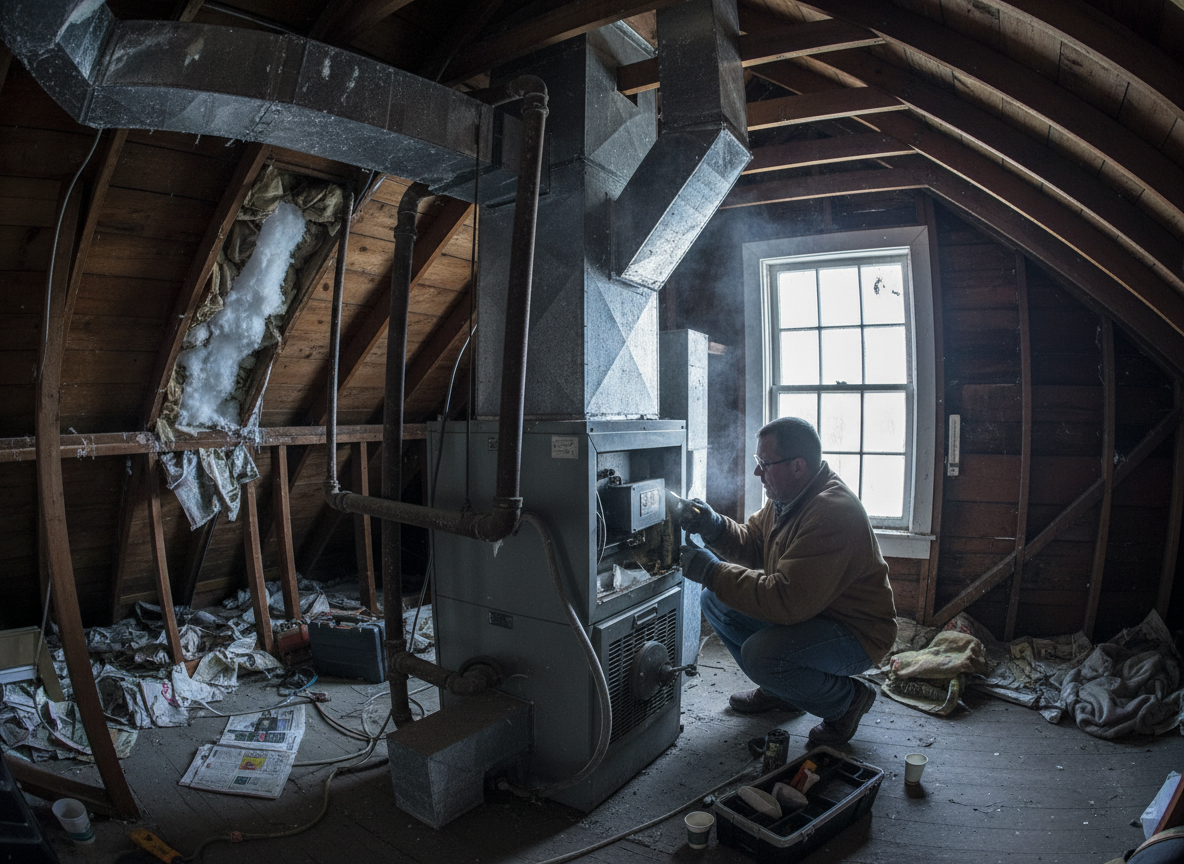
Common questions
Furnace Questions From Lowell, MA
The contact page lists the business address and the areas covered from it.